

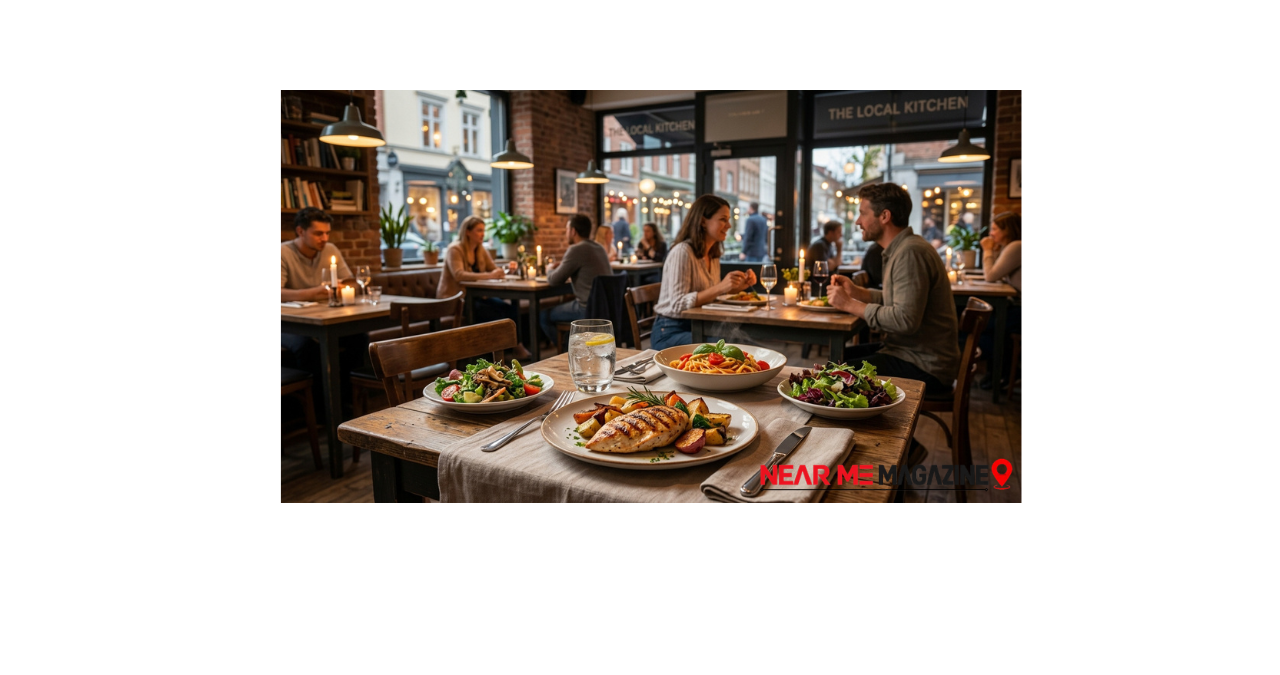
Choosing somewhere to eat should be simple, but somehow it rarely is. You open your phone because you are hungry, scroll through a dozen restaurants, read a few reviews, check the menus, and twenty minutes later you are still deciding.
The search for the Best Restaurants Near Me is not really about finding the restaurant with the highest rating. It is about finding somewhere that fits what you want right now. A brilliant fine-dining restaurant is not much help when you want a quick burger, and the perfect lunch café may not be where you want to celebrate an anniversary.
A little strategy makes the search easier. Recent reviews, realistic customer photos, menus, atmosphere, distance, price, and even the time of day can tell you far more than a star rating alone.
How to Find the Best Restaurants Near Me
Start by deciding what kind of meal you actually want.
Sounds obvious, doesn’t it? Yet it is surprisingly easy to start browsing restaurants before deciding whether you want pizza, curry, seafood, breakfast, burgers, or something completely different.
Even a loose preference helps.
Maybe you do not know exactly what you want, but you know you want somewhere casual. Or perhaps you want table service, somewhere quiet, and enough time to enjoy dinner without feeling rushed.
Once you know the mood, the list gets much shorter.
Think About the Occasion First
Different occasions call for different restaurants.
Lunch during a workday should probably be convenient and reasonably quick. Dinner with friends might need a lively atmosphere and dishes everyone can share.
Restaurants Near Me A date night usually benefits from comfortable seating, softer lighting, and enough space to have an actual conversation.
Family meals bring another set of priorities altogether.
There is no single restaurant that is perfect for every situation, which is why context matters more than simply choosing whatever appears first.
Don’t Rely on Star Ratings Alone
Ratings are useful, but they can be misleading when viewed without context.
A restaurant with a 4.7 rating based on 25 reviews is not necessarily more dependable than somewhere rated 4.4 after thousands of visits.
Read a selection of recent reviews instead.
What do people actually mention?
Are they praising the food? The service? Portions? Atmosphere?
Or are most positive comments about the décor while reviews of the food itself feel noticeably less enthusiastic?
That distinction matters.
Look for Patterns in Reviews
Every restaurant gets a bad review eventually.
Someone waits too long. A dish arrives colder than expected. A server has a difficult evening.
One complaint does not tell you much.
Repeated complaints do.
If several recent customers independently mention slow service, dirty tables, tiny portions, or inconsistent food, it is worth paying attention.
The same logic works in reverse.
When different customers repeatedly praise the same pasta, steak, curry, dessert, or house special, you have probably found something worth ordering.
Customer Photos Tell a More Realistic Story
Restaurant websites and promotional photographs are supposed to look beautiful.
There is nothing wrong with that.
But customer photos often tell you what dinner will actually look like.
They show real portions, plating, tables, lighting, and sometimes how busy the restaurant becomes.
You can often get a surprisingly accurate feel for a restaurant just by browsing a handful of recent photos.
A glamorous dining room in professional photographs may feel much smaller in reality. Meanwhile, a modest neighborhood restaurant may look warm, comfortable, and packed with people clearly enjoying themselves.
Check the Menu Before You Go
Menus solve several problems before they happen.
You can see whether the food appeals to you, whether the prices match your budget, and whether everyone in your group has something to eat.
This is especially important when dining with people who have different preferences.
Maybe one person wants steak, another is vegetarian, and somebody has decided today is the day they refuse to eat anything containing onions.
Groups are fun.
A Smaller Menu Can Be a Good Sign
An enormous menu looks impressive, but more choice does not always mean better food.
Restaurants with focused menus can concentrate on fewer dishes and ingredients.
That does not automatically guarantee quality, of course, but I often find a carefully chosen menu more reassuring than twelve pages containing everything from sushi to pizza to curry.
If a restaurant is known for something specific, try that first.
There is usually a reason regular customers keep ordering it.
Local Restaurants Are Worth Exploring
Independent restaurants often have a personality that is difficult to reproduce.
The menu might reflect family recipes, regional cooking, local ingredients, or a chef who cares deeply about one particular style of food.
That can make eating locally more interesting.
If you are still in the broader stage of deciding where to go, this guide to nearby restaurants can help you consider cuisine, atmosphere, reviews, and the type of meal you want.
But Don’t Automatically Dismiss Chains
There are moments when familiarity is useful.
You know the menu. You know roughly what the food costs. And, most importantly, you probably already know what you are ordering before you walk through the door.
Chains can work particularly well for families and groups because there is usually enough variety for different tastes.
They can also be convenient while traveling.
Sometimes discovering an independent neighborhood restaurant sounds exciting. After six hours on the road, however, predictable food can sound even better.
How Much Should Price Influence Your Decision?
Price matters, but expensive does not mean excellent.
Some of the most enjoyable meals come from simple neighborhood restaurants with modest prices.
On the other hand, higher prices can be justified when the restaurant uses premium ingredients, employs skilled preparation, or offers a more elaborate dining experience.
Think in terms of value rather than price alone.
Would you happily pay that amount again for the same meal?
That is a much better test.
Check Portions Too
Large portions can represent good value, but quantity should not be confused with quality.
A huge plate of average food is still average food.
Customer photos and reviews often give you a better idea of portion sizes than menu descriptions.
This is useful when comparing two restaurants with similar prices.
The Best Restaurants Near Me for Different Occasions
The restaurant you choose should fit the people you are eating with.
It sounds basic, but this is where many disappointing dining choices begin.
A place can serve excellent food and still be completely wrong for the evening.
Family Meals
For families, look for comfortable seating, a varied menu, reasonable waiting times, and enough space around the tables.
Restaurants that offer children’s portions or simple dishes can make things easier.
If you have younger children, extremely formal restaurants may feel more stressful than enjoyable.
A slightly lively atmosphere is sometimes a blessing. Nobody notices a dropped fork when the room is already buzzing.
Dinner With Friends
For friends, atmosphere becomes more important.
You want somewhere energetic enough to feel fun but not so noisy that conversation turns into shouting across the table.
Sharing dishes can work particularly well.
Pizza, tapas, barbecue, mezze, and many Asian cuisines naturally lend themselves to ordering several dishes for the table.
It also gives everyone an excuse to try something they would not normally order.
Date Night
A date-night restaurant does not need to be expensive.
Comfort matters more.
Look for pleasant lighting, good service, enough privacy between tables, and an atmosphere where you can talk.
Sometimes the little neighborhood restaurant with twelve tables has far more charm than somewhere technically more luxurious.
Think About Drinks and Coffee Too
Food gets most of the attention when choosing a restaurant, understandably, but drinks can shape the meal as well.
A good coffee after dinner can turn a satisfying meal into one you linger over.
If the restaurant’s coffee options are limited, you might even continue the evening at one of the nearby coffee shops instead.
There is something nice about changing location after dinner rather than sitting at the same table all evening.
Cold Coffee After a Meal?
In warm weather, cold coffee can be more appealing than a hot espresso.
If the menu offers both cold brew and iced coffee and you are not sure which one you want, understanding the differences between them can make the choice easier.
Cold brew generally has a smoother, mellow character, while iced coffee tends to retain more of the familiar brightness of traditionally brewed coffee.
And sometimes neither is what you want. Fair enough.
Reservations Can Save the Evening
Nobody enjoys arriving hungry and discovering a ninety-minute wait.
For popular restaurants, weekends, special occasions, and larger groups, booking ahead is usually sensible.
Even if the restaurant normally accepts walk-ins, a quick check before leaving can save you an unnecessary journey.
Timing Can Change the Experience
A restaurant at 6:00 p.m. can feel completely different from the same place at 8:30 p.m.
Earlier dining tends to be calmer.
Peak periods may bring more energy, but also more noise and longer waits.
Neither experience is necessarily better.
Choose according to what you want.
If conversation matters, slightly quieter hours are usually easier.
Look Beyond the Most Popular Areas
City centers and tourist districts naturally have many restaurants.
They are convenient and sometimes excellent.
But a few streets away, you may find places aimed more at local customers.
Neighborhood restaurants often rely heavily on repeat business rather than one-time visitors. That can encourage consistency.
It is not a guarantee, but when a restaurant has been feeding the same community for years, that is worth noticing.
Ask Locals a Better Question
When visiting somewhere unfamiliar, asking for recommendations is still useful.
But instead of asking, “What’s the best restaurant?”
Try asking, “Where do you normally go for dinner?”
The second question often produces more interesting answers.
The famous restaurant may be the place everyone recommends to visitors. The smaller place around the corner may be where locals actually spend their own money.
That distinction can lead to some excellent meals.
Consider Takeaway and Delivery
Eating inside the restaurant is not always practical.
Maybe the weather is terrible. Perhaps you are working late. Or maybe getting dressed and going out feels like far too much effort tonight.
Takeaway can be a good alternative.
Look for food that travels reasonably well.
Pizza, curry, noodles, rice dishes, grilled foods, and many sandwiches usually survive the journey better than dishes that depend heavily on crisp textures.
Fries, unfortunately, have a short, fragile life.
Sometimes Coffee Delivery Is Enough
Not every craving requires a complete restaurant order.
If you mainly want a drink or something small during a busy afternoon, coffee delivery near you may be more practical than ordering a full meal.
It is particularly useful during workdays when leaving home or the office would interrupt whatever you are doing.
Then again, walking to a café occasionally is probably good for all of us.
Dietary Requirements Should Be Checked Early
If someone in your group has dietary restrictions, check the menu before choosing a restaurant.
Vegetarian, vegan, halal, gluten-free, and allergen information may be available, but the amount of detail varies.
For serious allergies or medical dietary requirements, contacting the restaurant directly is usually the safest approach.
Do not wait until everyone is seated to discover that one person cannot safely order anything.
A two-minute check beforehand is easier.
Cleanliness Matters
This should barely need saying.
A restaurant does not need to look luxurious, but it should look cared for.
Tables, floors, menus, cutlery, and restrooms can tell you something about general attention to detail.
A little wear and tear in an old local restaurant is one thing.
Visible neglect is another.
Trust your instincts.
If something feels seriously off when you walk in, there are usually other options.
Don’t Overvalue Trendy Interiors
Some restaurants are designed for photographs.
Beautiful lighting. Plants everywhere. Statement walls—perfectly arranged tableware.
They can be lovely places to eat.
But aesthetics should not distract from the actual meal.
A restaurant does not become good because the chairs photograph well.
Equally, an old-fashioned interior does not mean the food will be poor.
Some extraordinary meals are served in very ordinary rooms.
Food still gets the final vote.
When Staying Home Wins
After researching restaurants, sometimes you decide you would rather stay home.
That is allowed.
You might cook something simple, order takeaway, or make your own drinks.
If café-style cold coffee is what you are craving after dinner, learning how to make iced coffee at home is surprisingly straightforward and can save a trip out.
Not every food decision needs to become an event.
Sometimes staying in is the right choice.
Finding the Best Restaurants Near Me While Traveling
Searching for Best Restaurants Near Me becomes particularly useful when you are somewhere unfamiliar.
You do not have your usual places to fall back on, so reviews, menus, and local recommendations become more valuable.
Avoid judging restaurants purely by distance from your hotel.
Walk ten minutes farther if something looks promising.
Sometimes the difference between a forgettable tourist meal and a restaurant you remember for years is one side street.
Markets are also worth exploring.
Food markets can let you try several local dishes without committing to a long formal meal.
Should You Always Order the House Specialty?
Not always, but it is usually worth considering.
If a restaurant has built its reputation around one dish, there is probably a reason.
Maybe it is handmade pasta.
A particular curry.
Smoked meat.
Seafood.
A dessert people refuse to share.
Ordering the specialty gives the restaurant a chance to show you what it does best.
You can always explore the rest of the menu on another visit.
Signs a Restaurant Is Worth Returning To
One excellent meal can happen anywhere.
A genuinely good restaurant delivers consistently.
The food is enjoyable on different visits. Service remains dependable. Prices feel fair for what you receive.
Eventually, you develop your regular order.
You know which table you like.
Maybe the staff recognizes you.
That is when a restaurant stops being a search result and becomes “our place.”
Those restaurants are worth holding onto.
Don’t Spend Forever Choosing
There is a point where restaurant research becomes counterproductive.
You compare ten places.
Then fifteen.
Then twenty.
Eventually, every restaurant has at least one negative review, and you start considering toast at home instead.
Choose a few promising options and make a decision.
Restaurants are experiences, not permanent commitments.
If tonight’s choice is merely good rather than extraordinary, there will be another dinner.
And possibly dessert.
Frequently Asked Questions
How can I tell if a restaurant is actually good?
Look beyond the overall rating. Read recent reviews, check customer photos, examine the menu, and pay attention to repeated comments about food quality, service, cleanliness, and value.
Should I choose the highest-rated restaurant nearby?
Not necessarily. Ratings are useful, but review count, recent feedback, cuisine, price, and the type of experience you want are equally important. A slightly lower-rated restaurant may suit your needs much better.
Is it better to book a restaurant in advance?
Booking is recommended for popular restaurants, weekends, special occasions, and larger groups. For casual restaurants during quieter periods, walking in may be perfectly fine.
How do I choose a restaurant for a group?
Check the menu beforehand and make sure there are options for different tastes and dietary requirements. Price, seating, atmosphere, and ease of booking also matter when several people are dining together.
Are local independent restaurants worth trying?
Yes. Independent restaurants can offer distinctive dishes, local character, and menus you may not find at larger chains. Chains are still useful when consistency and familiarity matter more.
Final Thoughts
Finding the Best Restaurants Near Me is less about chasing the highest rating and more about matching the restaurant to the moment.
Think about what you want to eat, who you are dining with, how much you want to spend, and what kind of atmosphere fits the occasion. Check recent reviews and customer photos, look at the menu, and do not automatically ignore smaller local restaurants.
Sometimes the best meal will come from the restaurant everyone is talking about. Other times, it will come from the quiet place around the corner that you nearly walked past.
Give yourself enough information to make a sensible choice, then stop scrolling and eat.
After all, the point was dinner, not a research project.
Frequently Asked Questions
How do I find the best restaurants near me for dinner?
Check recent reviews, menus, customer photos, price ranges, and the overall atmosphere before making a choice. It also helps to think about whether you want something casual, family-friendly, romantic, or suitable for a group.
Are highly rated restaurants always the best choice?
Not always. A high rating can be helpful, but recent reviews, the number of reviews, food quality, service, and whether the restaurant matches your preferences are just as important.
What should I check before booking a restaurant?
Look at the menu, opening hours, reservation policy, recent customer feedback, location, and any dietary options you may need. For larger groups or weekends, booking ahead is usually a good idea.
How can I find good local restaurants instead of chains?
Look beyond the busiest areas and check independent restaurants in nearby neighborhoods. Recent customer photos and reviews can help you spot smaller places that are popular with regular local diners.
What makes a restaurant worth visiting again?
Consistent food quality, good service, fair prices, cleanliness, and a comfortable atmosphere are strong signs. If you leave satisfied on more than one visit, you have probably found a restaurant worth keeping in mind.
