

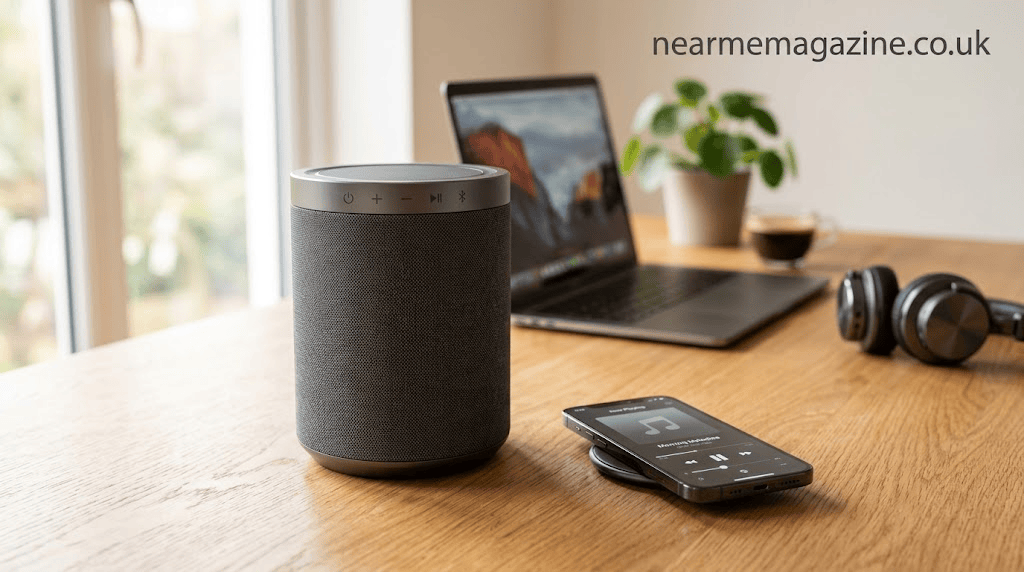
Best Bluetooth Speakers What to Know Before You Buy
There is something wonderfully simple about a Bluetooth speaker. Pick it up, connect your phone, press play, and suddenly the room feels a little more alive.
Maybe you want music while cooking. Perhaps you are heading to the park with friends, planning a small gathering, or just looking for something better than your phone’s built-in speaker. Whatever the reason, a good Bluetooth speaker can become one of those gadgets you use far more often than expected.
The difficult part is choosing one.
There are tiny speakers designed for portability, larger models built for powerful sound, waterproof options for outdoor use, and premium speakers that prioritize audio quality. Then there are battery life claims, Bluetooth versions, charging options, microphone features, and apps to consider.
So, what actually matters?
When comparing the Best Bluetooth Speakers, the smartest approach is to focus on how you plan to use the speaker rather than simply buying the biggest or most expensive model.
Best Bluetooth Speakers: What Features Actually Matter?
The Best Bluetooth Speakers should strike a useful balance among sound quality, battery life, portability, durability, and ease of connectivity.
You do not necessarily need every feature available.
If you mostly listen at home, for example, extreme portability might not matter much. If you take your speaker everywhere, however, size and battery life suddenly become much more important.
Sound Quality Comes First
A Bluetooth speaker can have excellent battery life and a beautiful design, but if it sounds unpleasant, you probably will not use it much.
Sound quality depends on several factors, including speaker drivers, enclosure design, tuning, and processing.
Bass, Mids, and Treble
Bass gives music its depth and impact.
Mids are important for vocals and many instruments, while treble contributes clarity and detail.
A good speaker should ideally produce a balanced sound rather than making one part of the music overpower everything else.
Some listeners prefer heavy bass, while others enjoy a more natural sound.
There is no universal answer here.
Size and Portability
Size can make a surprisingly big difference.
A compact speaker can easily fit into a backpack or even a large pocket. Larger models generally have more room for drivers and may produce fuller sound.
Small Speakers
Small speakers are excellent for travel, bedrooms, kitchens, and casual outdoor use.
Their biggest advantage is convenience.
You can move them around without thinking twice.
Larger Speakers
Larger models may be better for living rooms, parties, patios, or situations where you want more volume and fuller sound.
The trade-off is obvious: they are less convenient to carry.
Before buying, imagine where the speaker will actually spend most of its time.
Battery Life
Battery life is one of the biggest reasons to choose a Bluetooth speaker over a traditional wired setup.
You can move around without worrying about a power cable.
However, advertised battery life is usually measured under specific conditions. Higher volume, bass-heavy music, lighting effects, and other features can reduce actual runtime.
Think About Your Routine
If you only use your speaker at home, battery life may not be a major concern.
If you regularly take it outdoors, a longer-lasting battery can be extremely valuable.
Nobody wants the music to stop halfway through a picnic.
Charging Options
Check how the speaker charges before buying.
Many modern speakers use USB-C, which is convenient because the same cable may already be used by your phone and other devices.
Some larger models may have different charging arrangements.
A speaker that uses a common charging standard can make travelling much easier.
Bluetooth Range
Bluetooth range determines how far you can move away from the connected device before the connection becomes unreliable.
Real-world range depends on walls, interference, the phone, and the speaker itself.
For a bedroom or small room, this may barely matter.
For a garden or larger space, it can become more important.
Bluetooth Version
Newer Bluetooth standards can improve efficiency, connectivity, and feature support.
However, do not buy a speaker based only on the Bluetooth version printed on the box.
Actual performance depends on the entire system.
Reliable pairing and a stable connection are usually more important than chasing a particular specification.
Waterproofing and Durability
If you plan to use your speaker outdoors, durability deserves serious attention.
Water and dust resistance ratings can help you understand how well a speaker is designed to handle environmental exposure.
Poolside and Beach Use
If a speaker is going near a pool, beach, or campsite, look for an appropriate water- and dust-resistance rating.
Remember that water resistance does not necessarily mean a product can be treated carelessly.
Check the manufacturer’s instructions and rating carefully.
Outdoor vs Indoor Speakers
Indoor use generally allows you to prioritise sound quality, design, and size.
Outdoor use introduces different requirements.
You may need greater volume, longer battery life, stronger construction, and resistance to moisture or dust.
Outdoor Sound
Open outdoor spaces can make a speaker sound quieter because there are fewer surfaces for sound to reflect from.
That means a speaker that feels loud enough in your bedroom may seem less powerful in a garden.
Think about the environment, not just the advertised wattage.
Volume Matters, But Louder Isn’t Always Better
It is tempting to look for the loudest speaker you can find.
But maximum volume does not automatically mean better sound.
A speaker that becomes harsh or distorted at high volume may be less enjoyable than one that stays clear at a slightly lower level.
Quality matters.
Distortion at High Volume
Cheap or poorly tuned speakers can struggle when pushed hard.
Bass may become muddy, vocals can lose clarity, and the overall sound may become unpleasant.
If you frequently host gatherings, look for reviews that specifically discuss performance at higher volumes.
Stereo Pairing and Multi-Speaker Features
Some Bluetooth speakers can connect with another compatible speaker.
This can create a wider stereo presentation or increase coverage around a larger space.
Is It Worth It?
For casual listening, one speaker may be enough.
If you enjoy creating a larger home audio setup, speaker pairing can be a useful feature.
Check whether the manufacturer’s app or system supports the specific arrangement you want before buying multiple units.
Speakerphone and Microphone Features
Some Bluetooth speakers include built-in microphones.
This lets you use the speakerphone for phone calls or voice conversations.
It is not essential for everyone, but it can be useful if you work from home or regularly make group calls.
If clear calls matter, look for real-world microphone tests rather than relying solely on marketing claims.
Companion Apps
Some speakers come with smartphone apps.
These apps may provide equaliser controls, firmware updates, playback options, speaker pairing, or custom sound modes.
Do You Need an App?
Not necessarily.
A speaker should ideally work well without constantly requiring you to use an app.
However, an app can be useful if you like adjusting sound settings or managing multiple speakers.
Voice Assistant Support
Certain Bluetooth speakers can integrate with voice assistants.
This can make it easier to control music or compatible smart-home devices.
If you already use voice assistants at home, compatibility may be worth considering.
You can also explore our guide to Best Smart Home Devices if you are interested in expanding your home technology setup.
Bluetooth Speakers vs Wireless Earbuds
Speakers and earbuds serve completely different purposes.
Earbuds are personal. They are ideal for commuting, workouts, studying, and private listening.
Speakers are social and convenient when you want sound to fill a room or outdoor space.
If you are also considering earbuds, our guide to Best Wireless Earbuds covers the features worth checking before buying a pair.
Bluetooth Speakers for Home Use
For home use, you should prioritise sound quality over extreme portability.
A medium-sized speaker can provide fuller audio while still being easy to move between rooms.
Think about where you normally listen.
A kitchen speaker may need to be compact and easy to clean. A living-room speaker might benefit from stronger bass and a more refined design.
Bluetooth Speakers for Travel
Travel changes the priorities.
You want something compact, lightweight, durable, and capable of lasting through several hours of use.
A charging case or simple USB-C charging can also be convenient.
A speaker that fits easily into your luggage is far more useful than one that technically sounds better but takes up half your bag.
Bluetooth Speakers for Parties
If your goal is entertaining, volume and battery life become more important.
You may also appreciate features such as speaker pairing, party modes, or easy controls.
But don’t forget portability.
A huge speaker might sound fantastic, but it can be a pain to move around.
Bluetooth Speakers for Work and Study
A compact speaker can also be useful in a home office.
You might use it for background music, podcasts, online content, or occasional calls.
If you are creating a dedicated workspace, our guide, “Where to Buy a Desk Near Me,” can help you plan the rest of your setup.
Price and Value
Bluetooth speakers come in a wide range of prices.
Spending more can bring improvements in sound, build quality, battery life, software, and features.
But price alone does not tell you whether a speaker is good value.
Avoid Paying for Features You Won’t Use
If you never take your speaker outside, extreme waterproofing may not matter.
If you only listen casually, advanced equaliser controls might be unnecessary.
Choose the features that fit your lifestyle.
That is usually how you get better value.
How to Choose the Right Speaker
Before buying, make a quick list of your priorities.
Ask yourself:
Where will I use it?
Will I carry it regularly?
Do I need water resistance?
How many hours of battery life do I want?
Do I care more about bass or balanced sound?
Will I connect it to one device or several?
Do I need speakerphone functionality?
Answering these questions can immediately eliminate many unsuitable options.
Don’t Ignore Reviews
Product descriptions tell you what a manufacturer wants you to know.
Reviews can tell you what actually happens after using the speaker.
Look for comments about battery performance, sound at different volumes, connection stability, durability, and long-term reliability.
Pay particular attention to repeated complaints.
One negative review might be unusual. The same issue appearing again and again deserves attention.
Think About Your Other Tech
Your Bluetooth speaker does not exist in isolation.
Consider how it will work with your smartphone, laptop, tablet, smart-home devices, and other accessories.
For example, if you already have a phone you love, check its Bluetooth compatibility and available audio features before buying.
Our guide to Best Budget Smartphones may also be useful if you are considering upgrading the device you will use with your speaker.
Take Care of Your Speaker
A little maintenance can extend its useful life.
Keep charging ports clean, avoid unnecessary exposure to water, and store the speaker somewhere safe when you are not using it.
If the manufacturer provides cleaning or storage instructions, follow them.
And if the speaker is water-resistant, remember that seals and protective materials can become less effective as a product ages.
Final Thoughts
Choosing the Best Bluetooth Speakers does not have to be complicated.
Start with your lifestyle rather than the specification sheet.
If you want something for travel, focus on portability, battery life, durability, and reliable connectivity. For home listening, sound quality and design may matter more. For parties, volume and battery performance can move higher on your list.
Features such as waterproofing, speaker pairing, microphones, companion apps, and voice-assistant support can all be useful—but only if they fit the way you actually listen.
Most importantly, do not assume that the most expensive speaker is automatically the best.
The right Bluetooth speaker is the one that sounds good to you, connects without constant frustration, lasts long enough for your day, and is easy enough to take wherever you want.
Sometimes the best technology is not the gadget with the longest feature list.
It is the one you keep reaching for.
Frequently Asked Questions
What should I look for in the Best Bluetooth Speakers?
Focus on sound quality, battery life, portability, Bluetooth reliability, durability, charging options, and features that match your intended use. Outdoor users should also consider water and dust resistance.
Are expensive Bluetooth speakers worth it?
They can be worth the extra cost if you want better sound quality, stronger construction, longer battery life, or advanced features. However, a cheaper model may provide everything you need for casual listening.
How long should a Bluetooth speaker battery last?
Battery life varies significantly between models and usage conditions. Higher volume and certain features can reduce runtime, so real-world testing is useful when comparing speakers.
Are Bluetooth speakers waterproof?
Some are designed to resist water or moisture, but the level of protection varies. Check the specific water-resistance rating before using a speaker around pools, beaches, or in wet conditions.
Can I connect two Bluetooth speakers?
Some models support pairing or stereo configurations with another compatible speaker. The exact functionality depends on the manufacturer and model.
Are small Bluetooth speakers good?
Yes. Small speakers can be excellent for personal use, travel, bedrooms, kitchens, and casual outdoor listening. Larger models generally offer more powerful and fuller sound.
Can Bluetooth speakers work with smartphones and laptops?
Most modern Bluetooth speakers can connect to compatible smartphones, tablets, and laptops. Check the device specifications if you need advanced features such as multipoint connectivity.
