

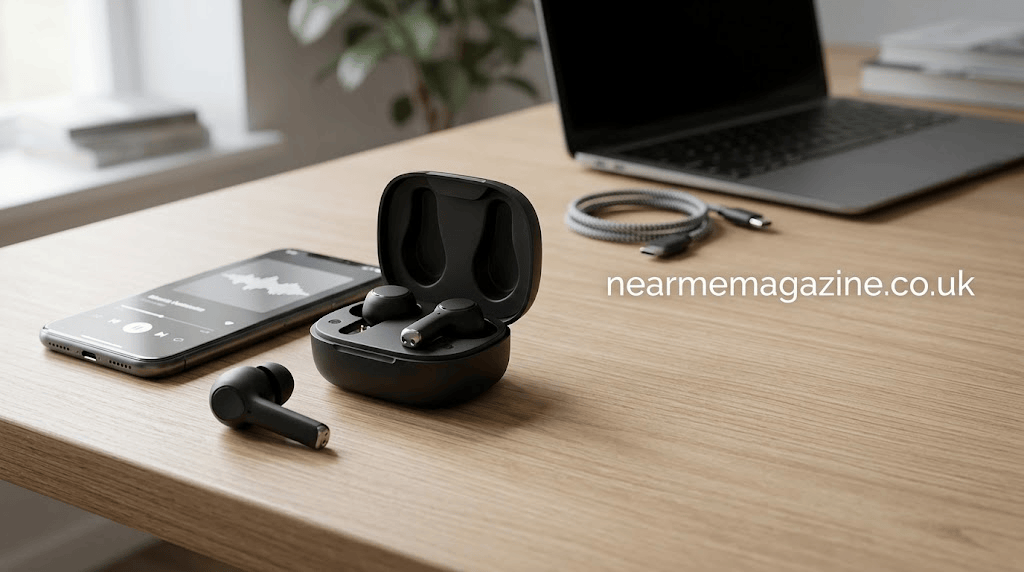
Wireless earbuds have gone from being a nice little convenience to something many people carry around every day. They are useful for music, podcasts, phone calls, workouts, commuting, studying, and those moments when you want to tune out the world for a while.
But buying a pair can be surprisingly confusing.
There are countless models with different prices, battery claims, noise-cancelling features, microphone systems, and audio specifications. Some look almost identical on the outside, yet perform very differently.
So, how do you choose?
The Best Wireless Earbuds are not necessarily the most expensive ones. A good pair should fit comfortably, sound enjoyable, connect reliably, last long enough for your routine, and offer the features you will actually use.
Best Wireless Earbuds: What Matters Most?
Before getting distracted by impressive specifications, think about how you plan to use your earbuds.
Someone who mainly listens to podcasts may care more about comfort and speech clarity. A frequent traveller may prioritise active noise cancellation. Someone who exercises regularly might care most about fit and water resistance.
There is no single perfect pair for everyone.
Sound Quality
Sound is obviously one of the biggest considerations.
A good pair of earbuds should produce clear vocals, balanced instruments, and enough bass to make music enjoyable without overwhelming everything else.
You do not necessarily need an audiophile-level setup.
For everyday listening, consistency and a sound profile you personally enjoy can matter more than technical specifications.
Comfort and Fit
This is easy to overlook when shopping online.
Earbuds sit inside or around your ears for extended periods, so comfort matters enormously.
Even excellent-sounding earbuds can become annoying if they constantly feel loose, tight, or heavy.
Look for models that include multiple ear-tip sizes when possible. A secure fit can also improve sound isolation and noise cancellation.
In-Ear vs Open-Fit Earbuds
Not all wireless earbuds fit your ears in the same way.
In-ear models generally create a seal inside the ear canal. This can improve bass response and passive noise isolation.
Open-fit designs sit more loosely and allow more outside sound through.
Which Style Is Better?
If you travel frequently or work in noisy environments, in-ear earbuds may be more useful.
If you prefer to remain aware of your surroundings while walking or working, an open-fit design can be more comfortable.
It really comes down to your environment and personal preference.
Active Noise Cancellation
Active noise cancellation, often called ANC, has become one of the most popular features in modern earbuds.
The technology uses microphones and electronic processing to reduce certain external sounds.
This can be especially helpful on buses, trains, aeroplanes, or busy streets.
Is ANC Worth Paying More For?
If you regularly spend time in noisy environments, absolutely consider it.
If you mostly use earbuds in a quiet bedroom or home office, you may not notice enough difference to justify spending considerably more.
Again, think about your actual routine.
Transparency or Ambient Mode
Many earbuds offer a transparency or ambient mode.
Instead of blocking outside sounds, the earbuds use microphones to let some environmental audio through.
This can be useful when someone speaks to you, when you are listening for announcements, or when you want to remain more aware of what is happening around you.
It is a small feature that can become surprisingly useful once you get used to it.
Battery Life
Battery life is another major consideration.
Manufacturers often advertise battery figures under specific testing conditions so that real-world results can vary depending on volume, ANC usage, calls, and other factors.
Think about how you actually use earbuds.
Short Daily Sessions
If you listen for an hour or two each day, most modern earbuds can provide enough battery life for regular use.
Long Trips and Travel
If you frequently travel for several hours, consider both the earbuds’ individual battery life and the charging case’s capacity.
A case that provides multiple additional charges can be extremely convenient.
Charging Case
The charging case is more important than it first appears.
It protects the earbuds while also recharging them between uses.
A compact case is convenient, especially if you carry it in a pocket or small bag.
Some models also support wireless charging, which can be useful if you already use one.
Bluetooth Connection
A reliable Bluetooth connection is essential.
The earbuds should connect quickly and remain stable without random dropouts.
Modern Bluetooth versions can offer improvements in efficiency, range, and connection reliability, although the exact experience depends on both the earbuds and your phone or other device.
If connection stability matters to you, real-world reviews can be more useful than simply looking at a Bluetooth version number.
Compatibility With Your Phone
Before purchasing, check compatibility with your smartphone, tablet, laptop, or other devices.
Most Bluetooth earbuds work across multiple platforms, but some features may work better within a particular device ecosystem.
For example, certain earbuds may offer quicker pairing, special controls, or additional settings when used with compatible phones.
If you regularly switch between devices, broader compatibility can be more valuable.
Microphone and Call Quality
Earbuds are not just for music anymore.
Many people use them for work calls, video meetings, voice messages, and regular phone conversations.
A good microphone system should make your voice understandable even in the presence of background noise.
Don’t Trust Marketing Alone
Terms such as “AI-powered microphone” or “advanced call technology” sound impressive, but they do not automatically guarantee excellent call quality.
Look for independent tests or real-world reviews if clear calls are important to you.
Water and Sweat Resistance
If you plan to use earbuds during exercise, pay attention to their water- and sweat-resistance rating.
A suitable rating can provide extra protection during workouts or light exposure to moisture.
However, water resistance does not mean the earbuds are automatically safe for every situation.
Always check the manufacturer’s specific guidance.
For Gym Users
A secure fit is just as important as moisture resistance.
Earbuds that constantly move or fall out during exercise can quickly become frustrating.
Controls and Touch Gestures
Many wireless earbuds use touch controls or physical buttons.
You may be able to play or pause music, skip tracks, answer calls, activate noise cancellation, or summon a voice assistant.
Physical Buttons vs Touch Controls
Touch controls can look sleek, but accidental taps can sometimes happen when adjusting your earbuds.
Physical buttons provide more deliberate feedback.
Neither system is universally better. Try to choose the one that feels intuitive for you.
Sound Customisation
Some earbuds come with companion apps that allow you to adjust the sound.
You can adjust bass and treble levels, noise-cancellation settings, or create a personalised equaliser profile.
This can be useful because everyone’s hearing and preferences are different.
A sound profile that one person loves might sound too bass-heavy or too bright to someone else.
Multipoint Connectivity
Multipoint Bluetooth allows compatible earbuds to stay connected to more than one device.
For example, you might connect to your laptop and phone simultaneously.
If a call comes in on your phone while you are listening to something on your laptop, the earbuds can switch between devices.
Who Needs Multipoint?
It is particularly useful for people who move between work and personal devices throughout the day.
For casual listeners who use only one phone, it may not be necessary.
Spatial Audio
Some higher-end earbuds support spatial audio.
The goal is to create a more immersive listening experience by making sound appear to come from different directions.
It can be particularly interesting for compatible movies, shows, and music.
However, it should be treated as an extra feature rather than the main reason to buy earbuds.
Build Quality
Earbuds are small, portable, and easy to drop.
Good build quality can therefore make a meaningful difference.
Look for sturdy cases, secure hinges, durable earbud materials, and a design that does not feel excessively fragile.
You do not necessarily need premium materials.
Practical durability is what matters.
How Much Should You Spend?
This is where things get interesting.
Wireless earbuds are available at many different price points, and spending more does not guarantee that you will enjoy them more.
A budget pair may be perfectly suitable for podcasts and casual music.
A mid-range model may offer a better balance of sound, comfort, battery life, and features.
Premium earbuds tend to add stronger noise cancellation, better microphones, more sophisticated software, or higher-end materials.
Choose Features, Not Just Price
Instead of setting a price and buying whatever has the longest list of specifications, identify your priorities.
If you never use ANC, why pay heavily for it?
If you make calls every day, microphone quality may be worth prioritising.
If you travel constantly, battery life and noise cancellation could matter more.
Wireless Earbuds for Work and Study
For work or study, comfort and microphone quality are particularly important.
You may wear earbuds for hours while attending meetings, listening to lectures, watching tutorials, or focusing on background music.
A comfortable fit can make a bigger difference than slightly better audio quality.
If you work from home and have a dedicated setup, you might also be interested in finding a suitable workspace. Our guide, “Where to Buy a Desk Near Me,” can help you create a more practical setup.
Wireless Earbuds for Gaming
Wireless earbuds can also be useful for gaming, particularly on mobile devices.
However, latency can matter.
A slight delay between an action and the corresponding sound can be noticeable in fast-paced games.
If gaming is your main purpose, look for earbuds with a low-latency mode or gaming-focused features.
For casual gaming, standard Bluetooth earbuds may be completely fine.
And if you’re looking for more gaming ideas, you can explore Best Games Like Roblox or Best Games Like GTA.
Wireless Earbuds for Travel
Travellers often benefit from a combination of ANC, battery life, comfort, and compact design.
A good pair can make long journeys much more pleasant.
Noise cancellation can reduce constant background noise, while a comfortable fit helps when you wear earbuds for several hours.
A small charging case is another advantage when luggage space is limited.
Check the Return Policy
Ear comfort is highly personal.
Something that feels perfect for one person may be uncomfortable for another.
That is why a clear return policy can be valuable when buying earbuds online.
If the fit is wrong or the sound does not suit you, being able to return them gives you more flexibility.
Don’t Ignore Software Support
Firmware updates can improve performance, fix bugs, and sometimes introduce new features.
Check whether the manufacturer regularly supports its earbuds.
A good hardware design can last much longer when the software behind it continues to receive useful updates.
How to Take Care of Wireless Earbuds
Small devices need regular care.
Keep the charging case clean, avoid exposing the earbuds to unnecessary moisture, and store them safely when you are not using them.
Clean the ear tips and speaker openings carefully, following the manufacturer’s instructions.
Also, avoid leaving the charging case somewhere it can easily be crushed or dropped.
Simple habits can extend the life of your earbuds.
Final Thoughts
Choosing the Best Wireless Earbuds is really about matching features to your lifestyle.
Do not buy a pair simply because it has the biggest specification list or the highest price.
Think about comfort first. Then consider sound quality, battery life, noise cancellation, microphone performance, connectivity, durability, and the features you genuinely expect to use.
For travellers, ANC and battery life may be the priority. For students, comfort and reliability could matter more. For gym users, fit and water resistance are key.
And for everyday listening, a balanced pair that works without fuss may be the best choice of all.
The perfect earbuds are not necessarily the ones everyone recommends.
They are the ones you can put in your ears, press play, and forget about—because everything is working exactly as it should.
Frequently Asked Questions
What should I look for when buying wireless earbuds?
Focus on sound quality, comfort, battery life, microphone performance, Bluetooth reliability, durability, and features such as ANC. Your intended use should determine which features matter most.
Are expensive wireless earbuds worth it?
They can be, especially if you value advanced noise cancellation, premium sound, better microphones, or additional software features. However, many affordable models are perfectly capable for everyday listening.
Is noise cancellation important?
ANC is especially useful in noisy environments such as public transport, offices, and aeroplanes. If you mainly listen in quiet places, you may not need to prioritise it.
How long should wireless earbuds last?
Battery performance varies by model and usage. With proper care, the earbuds themselves can remain useful for years, although battery capacity will naturally decline over time.
Are wireless earbuds good for phone calls?
Many modern earbuds offer good call quality, but performance varies. If calls are important, pay particular attention to microphone quality and background-noise handling.
Are wireless earbuds suitable for workouts?
Many are suitable for exercise when they have a secure fit and appropriate water or sweat resistance. Always check the specific resistance rating and manufacturer guidance before using them during workouts.
Do wireless earbuds work with laptops?
Most Bluetooth earbuds can connect to compatible laptops. However, features such as multipoint connectivity or specialised controls may depend on the specific earbuds and operating system.
