

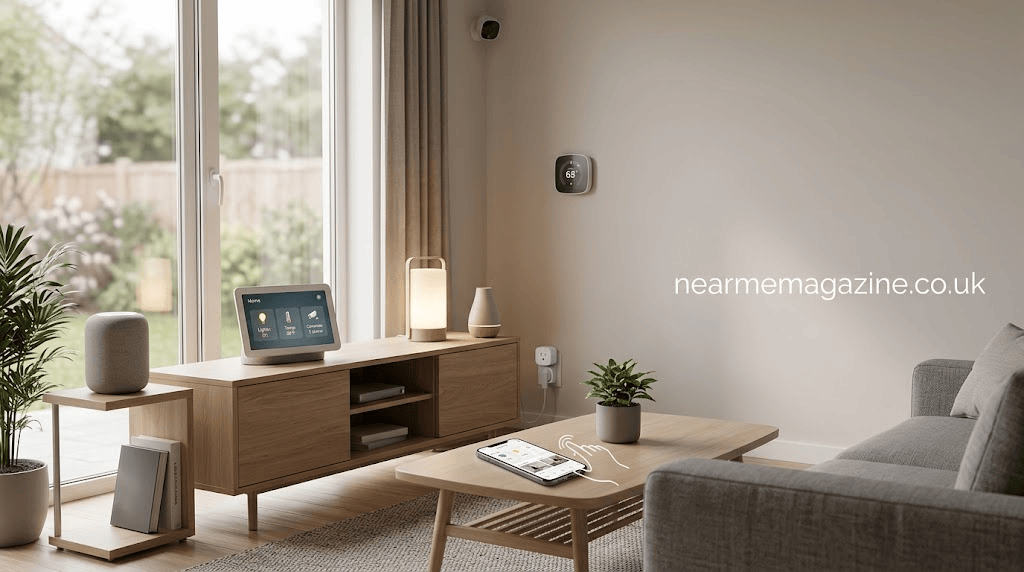
Smart home technology used to sound like something from a futuristic movie. Lights turning on by themselves, speakers answering questions, cameras sending alerts to your phone—it all felt a little excessive.
Now, it is surprisingly normal.
You can wake up to a gentle light, check who is at the door without getting up, adjust the temperature from your phone, or turn off a forgotten lamp while already lying in bed. The best part is that smart home technology does not have to make your house complicated.
The Best Smart Home Devices are often the simple ones that quietly make everyday routines easier.
Whether you live in a large house, a small apartment, or somewhere in between, there are plenty of practical devices worth considering. The trick is choosing technology that solves an actual problem rather than buying gadgets simply because they look clever.
What Makes a Smart Home Device Useful?
A smart device should make something easier, faster, safer, or more convenient.
That sounds obvious, but it is surprisingly easy to end up with gadgets that you rarely use.
Before buying anything, ask yourself a simple question: What annoying little task could this device make easier?
Maybe you always forget to switch off the lights. You may want to monitor your front door while you are away. Or maybe you would like music available without having to reach for your phone.
Those everyday problems are where smart technology can be genuinely useful.
Best Smart Home Devices for Everyday Convenience
The Best Smart Home Devices are not necessarily the most advanced products on the market.
A good smart bulb, plug, speaker, or doorbell can sometimes have a bigger impact on daily life than an expensive collection of complicated gadgets.
Here are some of the most useful categories to consider.
Smart Speakers
Smart speakers are often one of the easiest ways to start building a connected home.
They can play music, answer questions, set timers, provide reminders, control compatible devices, and perform other voice commands.
Why Smart Speakers Are Useful
Imagine cooking dinner with messy hands and needing a timer.
Instead of touching your phone, you can ask the speaker to set one.
The same idea works for alarms, reminders, music, weather information, and compatible smart-home controls.
For many people, this is where smart technology starts feeling genuinely practical.
Placement Matters
A smart speaker can be useful in a kitchen, bedroom, living room, or home office.
You do not necessarily need one in every room.
Start with the space where you spend the most time and see how useful it becomes.
Smart Lighting
Smart bulbs are another simple upgrade.
They can often be controlled using an app, voice commands, schedules, or automation.
You can switch lights on and off remotely and, depending on the model, adjust brightness or colour.
Creating Routines
Smart lighting becomes more useful when combined with routines.
For example, you could set bedroom lights to gradually brighten in the morning or have outdoor lights switch on around a particular time.
You can also create a “movie night” setting that dims selected lights at once.
It sounds like a small thing.
But small conveniences add up.
Smart Plugs
Smart plugs are particularly useful because they can make ordinary appliances smarter.
You can plug in a lamp, fan, coffee maker, or another compatible device and control its power through an app or automation.
A Simple Starting Point
If you are not ready to buy lots of smart appliances, smart plugs offer an inexpensive way to experiment with home automation.
They can also help create schedules.
For example, a lamp could turn on automatically in the evening and switch off later at night.
Just make sure the appliance is appropriate for the smart plug and stays within its rated electrical limits.
Smart Doorbells
A smart doorbell can add convenience and an extra layer of awareness around your front entrance.
Many models include a camera and can send notifications to your phone when movement is detected, or someone presses the doorbell.
Checking the Front Door Remotely
One of the most useful features is being able to see who is outside without immediately opening the door.
Depending on the model, you may also be able to communicate with visitors through two-way audio.
Before purchasing one, consider installation requirements, Wi-Fi strength, subscription costs, storage options, and privacy settings.
Smart Security Cameras
Home security cameras have become more accessible and easier to install.
Depending on the model, they may offer motion detection, night vision, two-way communication, recording, and mobile notifications.
Indoor vs Outdoor Cameras
Indoor cameras are generally designed to monitor rooms in your home.
Outdoor cameras need to be built to withstand weather conditions and temperature fluctuations.
Think about what you actually want to monitor before buying.
There is little point paying for an outdoor-rated camera if you only need to keep an eye on a living room.
Smart Thermostats
A smart thermostat can help make heating and cooling more convenient.
Instead of manually adjusting the temperature throughout the day, compatible systems let you create schedules or make adjustments remotely.
Comfort Without Constant Adjustments
You might want your home comfortable before you arrive, without leaving the heating or cooling running all day unnecessarily.
Smart controls can make that easier.
However, compatibility is important. Heating systems vary considerably, so check whether a particular thermostat works with your setup before purchasing.
Robot Vacuum Cleaners
Robot vacuums are one of those gadgets that initially seem slightly unnecessary.
Then you own one.
Suddenly, having the floor cleaned automatically feels pretty nice.
Many robot vacuum cleaners can navigate rooms, avoid obstacles, return to their charging stations, and run according to a schedule.
Are They Really Worth It?
For busy households, pet owners, or people who dislike frequent vacuuming, they can be genuinely helpful.
They do not necessarily replace a traditional deep clean, but regular automated cleaning can reduce the amount of dust and debris that builds up.
Smart Kitchen Devices
Smart technology is also finding its way into kitchens.
Depending on your needs, you can find connected appliances, smart displays, cooking devices, timers, and other gadgets designed to simplify everyday tasks.
Keep It Practical
Not every kitchen needs a smart version of everything.
A useful smart device should save time or reduce effort.
If a gadget takes longer to set up than it saves in daily use, it may not be worth the trouble.
That is a good rule for smart technology in general.
Smart Displays
A smart display combines features of a smart speaker with a screen.
It can show information such as weather, timers, calendars, recipes, photos, and other compatible content.
This can be particularly handy in kitchens.
You can follow a recipe while cooking or keep a timer visible without repeatedly checking your phone.
Smart Sensors
Sensors are less exciting than flashy gadgets, but they can be incredibly useful.
Motion sensors, door sensors, temperature sensors, and leak sensors can provide information about what is happening around your home.
Leak Detection
A water leak can become a serious problem if it goes unnoticed.
A smart water-leak sensor can alert you when it detects moisture in a vulnerable area.
That small notification could help you react before a minor issue becomes a much bigger one.
Smart Smoke and Safety Devices
Connected smoke and carbon monoxide detectors can provide alerts and monitoring features depending on the model.
Safety should always come before convenience, though.
If you are replacing an existing safety detector, make sure the new device meets the appropriate safety standards and is installed correctly.
Smart features should be an addition to proper safety equipment, not a substitute for it.
Smart Locks
Smart locks can provide alternative ways to secure and access your home.
Depending on the model, you might use a keypad, a phone app, fingerprint recognition, or another authentication method.
Some can also provide temporary access codes.
Think About Backup Access
Smart locks depend on batteries and technology, so backup options matter.
Before installing one, understand what happens if the battery dies, your phone is unavailable, or the internet connection goes down.
Convenience is great, but you should never make your home inaccessible because one gadget stopped working.
Wi-Fi and Smart Home Connectivity
A smart home is only as reliable as its network.
If your Wi-Fi signal is weak in certain rooms, connected devices may struggle.
Before adding lots of gadgets, check your router placement and network coverage.
Too Many Devices?
You do not necessarily need dozens of smart products.
A few well-chosen devices connected reliably are much better than a house full of gadgets that constantly disconnect.
Start small and expand gradually.
Privacy and Security Matter
Smart devices often collect or process information.
Cameras, microphones, location data, activity information, and usage patterns can all raise privacy considerations.
Before buying a device, review its privacy settings and understand how data is handled.
Protect Your Accounts
Use strong, unique passwords and enable two-factor authentication when available.
Keep device software updated as well.
These simple steps can improve the security of your connected home.
Do Smart Home Devices Need the Internet?
Some devices rely heavily on an internet connection, while others can continue performing certain functions locally.
This varies by product.
Before buying, check what happens if your internet connection disappears.
A smart light that cannot be switched on when the Wi-Fi goes down can be annoying. A security device becoming unavailable during an emergency is a much bigger concern.
Understanding offline functionality is therefore worth your time.
How Much Should You Spend?
You do not need to spend a large amount to get started.
Smart bulbs and plugs can be relatively inexpensive, while cameras, robot vacuums, thermostats, and advanced appliances can cost considerably more.
Start with one or two devices that solve a real problem.
If you find yourself using them regularly, you can build from there.
Build a Smart Home Slowly
There is no prize for having the most connected house.
Start with something simple.
A smart speaker can introduce voice control. Smart bulbs can improve lighting. A smart plug can automate an ordinary lamp. A doorbell can provide useful awareness around your entrance.
Once you understand how your devices work together, adding more becomes much easier.
Smart Technology for a Home Office
Smart home devices can also improve a workspace.
A smart light can provide better control over your lighting, while a smart plug can manage desk lamps or other compatible equipment.
If you are creating a dedicated workspace, choosing the right desk is another important step.
You can also explore our guide to Where Can I Print Documents Near Me? if you regularly need printed work or documents.
Don’t Forget Your Entertainment Setup
Smart technology can make entertainment more convenient too.
Speakers, streaming devices, smart displays, lighting, and compatible televisions can work together to create a more comfortable setup.
The goal should not be complexity.
It should be making the things you already enjoy easier to control.
Smart Home Devices and Your Daily Routine
The real value of connected technology appears when devices fit naturally into your routine.
Lights can switch on when you arrive home.
A robot vacuum can clean while you are away.
A smart speaker can remind you about an appointment.
A security camera can notify you about activity outside.
None of these features completely changes your life.
But together, they can eliminate many minor inconveniences.
Final Thoughts
The Best Smart Home Devices are the ones that quietly make your everyday life easier.
You do not need a futuristic house packed with gadgets. A few practical additions can be enough to make a noticeable difference.
Start by identifying the routines that annoy you most. You may forget to turn off lights, want easier control over your heating, need better awareness around your front door, or want to spend less time cleaning.
Then choose technology that solves that particular problem.
Smart speakers, lighting, plugs, security cameras, doorbells, robot vacuums, sensors, and connected thermostats can all be useful when chosen thoughtfully.
Just remember to consider compatibility, Wi-Fi reliability, privacy, security, maintenance, and long-term costs before buying.
The smartest home is not necessarily the one with the most technology.
It is the one where technology works quietly in the background, giving you a little more time, comfort, and peace of mind.
Frequently Asked Questions
What are the Best Smart Home Devices for beginners?
Smart bulbs, smart plugs, and smart speakers are good starting points because they are relatively simple to set up and can provide noticeable convenience without requiring a complete home automation system.
Are smart home devices worth buying?
They can be, especially when they solve a problem you regularly experience. Devices that automate repetitive tasks or provide useful information tend to offer more value than gadgets purchased simply for novelty.
Do smart home devices work without Wi-Fi?
Some devices can perform certain functions without an internet connection, while others depend heavily on cloud services. Always check the product specifications before buying if offline operation is important to you.
Are smart home devices safe?
Smart devices can be safe when properly installed and secured. Use strong passwords, enable available security features, keep software updated, and carefully review privacy settings.
What is the easiest smart home device to install?
Smart bulbs and smart plugs are generally among the easiest options. Many can be installed without complicated wiring or professional installation.
Can smart home devices save money?
Some devices may reduce unnecessary energy use by automating lights, heating, or appliances. However, savings depend on the device, your habits, and how you use the technology.
Should I make my whole house smart at once?
Not necessarily. Starting with a few useful devices is usually better. Once you understand what works for your home, you can gradually add more technology.
