

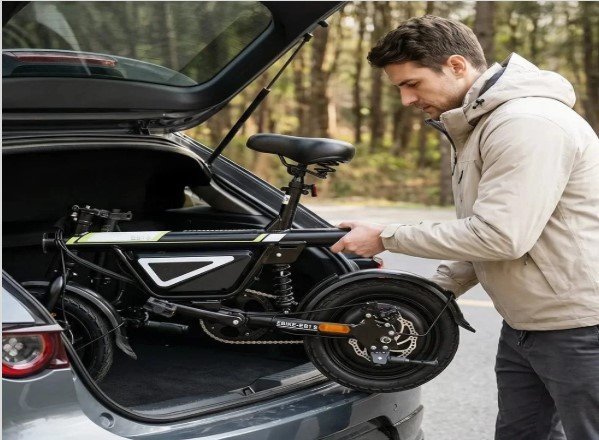
For many people, daily commuting has become one of the most time-consuming and expensive parts of modern life. Traffic congestion, rising fuel costs, parking difficulties, and unpredictable journey times can make even short trips feel unnecessarily complicated. As cities continue to explore more sustainable transportation options, electric bicycles are emerging as a practical alternative for people who want greater flexibility in their everyday journeys.
Unlike conventional bicycles, electric bikes combine pedal power with an electric motor that assists the rider while pedalling. This additional support can make commuting more manageable, particularly over longer distances, on hilly routes, or when travelling in challenging weather conditions. For people who want to reduce their dependence on a car without giving up the convenience of personal transportation, commuter e-bikes offer an appealing middle ground.
Rethinking the Daily Commute
Cars remain useful for many journeys, particularly when carrying heavy loads, travelling with several passengers, or covering long distances. However, using a car for every trip is not always the most practical solution. Short journeys to work, local shops, public transport stations, or nearby appointments can often be completed more efficiently by bicycle.
Electric assistance helps make these journeys accessible to a wider range of people. Riders can travel at a comfortable pace without needing the same level of physical exertion required by a conventional bicycle. This can be especially beneficial for commuters who want to arrive at work feeling comfortable rather than exhausted.
An electric bike also provides flexibility when travel plans change. Instead of waiting for a bus, searching for parking, or relying entirely on a car, riders can often choose routes that better suit their schedules and destinations.
The result is a commuting option that can fit into different lifestyles, whether someone travels to an office every day or combines cycling with other forms of transportation.
Making Everyday Travel More Flexible
One of the main advantages of electric bicycles is their ability to adapt to different commuting needs. They can be suitable for short local trips, regular journeys to work, and certain longer commutes that might otherwise feel impractical on a standard bicycle.
Greater freedom on urban routes
In many urban areas, congestion makes driving unpredictable. A journey that appears short on a map can take considerably longer during peak traffic periods. Depending on local road layouts and cycling infrastructure, an electric bicycle may allow commuters to use designated cycle routes and avoid some of the delays associated with busy roads.
Cycling also makes it easier to stop at local businesses, collect small purchases, or make additional stops without worrying about finding another parking space.
Of course, journey times depend on distance, road conditions, traffic rules, and the availability of safe cycling routes. Nevertheless, the ability to choose alternative paths can make everyday travel more adaptable.
Combining cycling with public transport
Electric bicycles can complement buses, trains, and other public transport services. A commuter might cycle from home to a railway station, complete the main part of the journey by train, and use the bicycle again to reach the workplace.
This approach can reduce reliance on cars for the entire journey while extending the practical reach of public transportation.
Folding electric bikes may be particularly useful for commuters who need to store their bicycle in a small space. However, transport operators have different policies regarding bicycle carriage, battery restrictions, and folding models, so it is important to check the relevant rules before travelling.
Adapting to changing schedules
Not every working day follows the same routine. Meetings, errands, shopping trips, and unexpected appointments can change when and where someone needs to travel.
An electric bicycle can provide more independence for these everyday variations. Riders can leave when they are ready, choose a suitable route, and make additional stops without depending entirely on fixed public transport timetables.
For people with predictable daily routes but occasional schedule changes, this flexibility can make commuting less stressful.
Reducing the Cost of Everyday Transportation
Transportation costs extend well beyond the initial price of a vehicle. Car ownership can involve fuel, insurance, servicing, parking, tyres, registration, and depreciation. Even people who drive relatively short distances may spend a substantial amount maintaining their vehicles.
Electric bicycles generally have lower day-to-day running costs. Charging a battery typically requires much less electricity than the energy expenditure associated with operating a car, while routine maintenance can be comparatively straightforward.
However, the total cost depends on the bicycle’s purchase price, battery quality, replacement parts, maintenance needs, and how frequently it is used.
Before buying, commuters should consider the full cost of ownership rather than focusing solely on the purchase price. Essential accessories, such as a helmet, secure lock, lights, and weather-appropriate clothing, should also be included in the budget.
For people who can replace several regular car journeys with cycling, the potential savings may be meaningful over time. The financial benefit will vary according to local prices and the number of car trips actually avoided.
A More Sustainable Way to Travel
Transportation is a significant source of greenhouse gas emissions, and reducing unnecessary car journeys can contribute to lower transport-related emissions.
Electric bicycles use rechargeable batteries and do not produce exhaust emissions while being ridden. Their overall environmental impact is influenced by electricity generation, battery manufacturing, product lifespan, and eventual battery disposal, but they generally require substantially less energy during operation than passenger cars.
Replacing a short car journey with an electric bicycle can be a practical step towards more sustainable everyday travel. The impact can become more significant when commuters make this change consistently rather than treating the bicycle as an occasional recreational option.
Electric bikes can also help support more efficient use of urban space. They require less parking space than cars and can contribute to less congestion when suitable cycling infrastructure encourages people to make the switch.
For individuals looking to make their routines more environmentally conscious without abandoning motor-assisted transportation altogether, electric bicycles provide a useful alternative.
Supporting an Active Lifestyle
Another advantage of electric cycling is that it combines transportation with physical activity. Although the motor assists the rider, pedalling remains an important part of the experience.
The level of effort depends on the assistance setting, terrain, distance, and rider preferences. People can choose lower assistance when they want more exercise or higher assistance when they need additional support.
This flexibility may help make cycling a sustainable long-term habit for people who find conventional cycling too demanding for everyday travel.
Regular physical activity can support cardiovascular fitness, mobility, and general well-being. An electric bicycle does not automatically guarantee these benefits, but it can make active transportation more achievable for people who would otherwise drive.
For commuters, the opportunity to incorporate movement into an existing daily routine can be more convenient than finding separate time for exercise.
Choosing the Right Commuter E-Bike
Selecting the right electric bicycle requires consideration of more than appearance or motor power. A suitable model should match the distance, terrain, storage arrangements, and practical demands of the rider’s everyday journey.
Battery range and charging
Battery range is one of the most important considerations. Manufacturers often advertise maximum distances achieved under favourable conditions, but real-world performance can vary according to rider weight, terrain, wind, temperature, tyre pressure, and assistance level.
Commuters should estimate their daily round-trip distance and choose a battery that provides a comfortable margin. A longer range can be useful for unexpected detours or journeys that extend beyond the usual route.
It is also worth considering whether the battery can be removed for charging and whether a convenient charging location is available at home or work.
Motor assistance and terrain
Motor assistance can make hills and longer journeys easier, but the appropriate system depends on the route and local regulations. Riders travelling over mostly flat roads may have different requirements from those regularly climbing steep inclines.
Consider how smoothly the motor provides assistance, how the bicycle feels when starting from a stop, and whether the available support suits the rider’s comfort level.
Before purchasing, check local regulations concerning motor power, assisted speed limits, throttle operation, and whether registration or other requirements apply.
Comfort and riding position
A comfortable riding position can make a noticeable difference during daily use. Frame geometry, saddle design, handlebar height, tyre width, and suspension all influence how a bicycle feels over different distances.
Commuters should choose a frame size that fits properly and allows them to maintain a stable, natural posture. A test ride can help identify potential issues with reach, balance, braking, and handling.
For regular urban journeys, practical features such as mudguards, a rear rack, integrated lights, and a kickstand may be more valuable than features designed primarily for recreational riding.
Security and maintenance
Electric bicycles can represent a significant investment, making security essential. A strong lock, sensible parking choices, and secure indoor storage can help reduce theft risk.
Battery care also matters. Following the manufacturer’s charging and storage instructions can support battery longevity. Regular checks of tyre pressure, brakes, lights, chain condition, and electrical connections can help keep the bicycle operating reliably.
Before purchasing, investigate the availability of replacement batteries, compatible chargers, repair services, and warranty support. A model that is easy to maintain locally may be more practical than one with limited access to spare parts.
Safety Should Remain a Priority
Electric bicycles can be a convenient way to travel, but safe riding practices are essential. Riders should wear an appropriately fitted helmet, use lights in low-visibility conditions, and remain aware of vehicles, pedestrians, and road hazards.
Braking performance, tyre condition, and predictable handling are particularly important in busy urban environments. Riders should become familiar with the bicycle’s acceleration and stopping distance before entering heavy traffic.
Planning a route that prioritises designated cycle lanes, quieter roads, and suitable crossings can make daily journeys more comfortable. Where dedicated cycling infrastructure is unavailable, commuters should follow local traffic rules and avoid manoeuvres that put themselves or others at risk.
Weather conditions should also influence travel decisions. Wet roads can reduce traction, while strong winds and poor visibility may make cycling more challenging. Appropriate clothing and regular equipment checks can help riders prepare for changing conditions.
Making the Transition from Car to E-Bike
Switching from driving to electric cycling does not need to happen all at once. For many people, a gradual approach is the most realistic way to build confidence and discover which journeys are suitable for an electric bicycle.
Start by identifying short trips that are easy to complete by bike, such as travelling to a nearby shop or cycling to a public transport station. Once the route feels familiar, consider using the bicycle for selected commuting days.
Planning ahead can make the transition easier. Check the availability of secure parking at work, identify a suitable charging location, and prepare for changing weather. If carrying work essentials is necessary, a pannier or rear rack may be more comfortable and practical than a backpack.
It is also worth comparing journey times honestly. Although an electric bicycle may avoid certain traffic delays, it may not be the fastest option for every route. The aim is to find journeys where cycling offers a useful combination of convenience, cost, comfort, and reliability.
Conclusion
Moving beyond the car does not mean giving up convenient personal transportation. Electric bicycles offer an adaptable way to approach everyday travel, helping commuters manage traffic, reduce certain transportation expenses, incorporate physical activity, and make more sustainable choices.
Their greatest advantage is flexibility. With the right combination of battery range, motor assistance, comfort, practical accessories, and safety features, an electric bicycle can handle a wide variety of routine journeys while complementing public transport and other travel options.
For anyone looking to rethink their daily commute, commuter e-bikes provide a practical starting point. By matching the bicycle to real-world travel needs and introducing it gradually into an existing routine, commuters can discover a more flexible approach to getting around—one journey at a time.
