

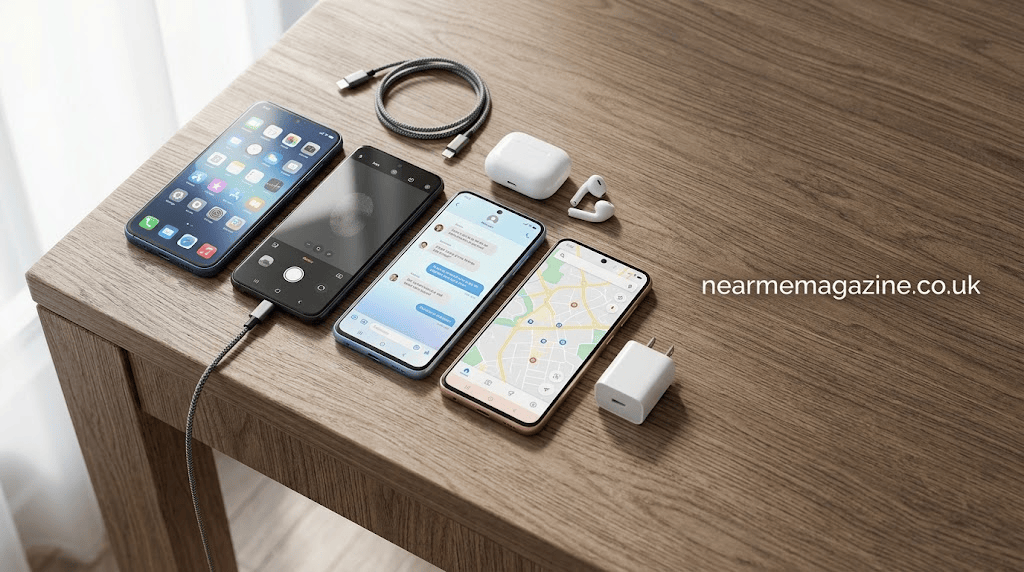
Buying a new phone does not always mean spending a small fortune. In fact, some of the most practical smartphones today offer a surprisingly good mix of performance, battery life, camera quality, and useful features without costing a premium.
The tricky part is knowing what actually matters.
A phone may have an impressive camera count on the box but struggle with everyday performance. Another might look basic but offer excellent battery life and smooth software. So, when you’re looking at the Best Budget Smartphones, it helps to focus less on flashy specs and more on how the phone fits into your daily routine.
Whether you need a phone for calls, social media, photos, streaming, work, study, or a bit of gaming, there are plenty of affordable options worth considering.
What Should You Expect From a Budget Smartphone?
A budget smartphone does not necessarily mean a bad smartphone.
Modern affordable phones can handle many everyday tasks comfortably. Browsing websites, watching videos, using messaging apps, taking photos, checking email, and scrolling through social media are usually well within their capabilities.
The main compromises appear when you compare them with expensive flagship models.
You may get a less powerful processor, fewer camera features, slower charging, or a simpler build. But if you do not need premium extras, those differences may not matter much.
Best Budget Smartphones: What to Look For
The Best Budget Smartphones are usually the ones that balance several important features rather than being excellent in only one area.
Before buying, think about how you actually use your phone.
Performance
Performance determines how smoothly your phone handles everyday tasks.
Look for a reasonably modern processor and enough RAM for the apps you regularly use. If you frequently switch between messaging, browsing, video, and social media apps, a phone with better multitasking capability can make a noticeable difference.
You do not necessarily need the fastest chip available.
For most people, consistent everyday performance is more valuable than benchmark numbers.
Battery Life
Battery life can make or break the experience.
A phone with a huge list of features is not particularly useful if you constantly need to search for a charger.
Consider your routine. If you spend a lot of time watching videos, using navigation, taking photos, or browsing social media, prioritise a phone with a long-lasting battery and efficient hardware.
Display Quality
You will probably look at your phone’s screen hundreds of times every day.
A good display should have comfortable brightness, decent viewing angles, and a resolution that makes text and images look clear.
A smoother refresh rate can also make scrolling feel more responsive.
You do not need the most expensive display technology to enjoy a good viewing experience.
Camera Quality on Affordable Phones
Phone cameras have improved significantly across different price ranges.
However, more cameras do not automatically mean better photography.
A phone might include multiple lenses for different purposes, but the quality of the main camera, image processing, and software can matter much more.
Main Camera
The main camera is usually the one you will use most often.
Look for reviews and real-world sample photos rather than judging a camera entirely by megapixels.
Good processing can make a major difference in colour, exposure, skin tones, and detail.
Low-Light Photography
This is where cheaper smartphones can sometimes show their limitations.
Photos taken during the day may look excellent, while evening or indoor shots can appear softer or noisier.
If photography is important to you, pay particular attention to low-light performance before buying.
Front Camera
For video calls, selfies, and social media, the front camera matters too.
You do not necessarily need a high-megapixel sensor. Good image processing and natural-looking exposure can be more important.
Storage Matters More Than You Might Think
Running out of storage is frustrating.
Apps, photos, videos, documents, and downloaded media can quickly consume space.
If you take lots of pictures or record videos regularly, consider choosing a model with more internal storage.
Cloud storage can help, but having enough local space still makes everyday use more convenient.
Should You Choose Expandable Storage?
Some phones support memory cards, while others do not.
If expandable storage is important to you, check this before purchasing. It can be a useful way to keep the initial cost lower while giving yourself more room later.
Software and Updates
Hardware gets plenty of attention, but software is just as important.
A phone should feel easy to use, receive security updates, and provide a reasonably clean experience.
Before buying an affordable smartphone, check how long the manufacturer promises software and security support.
A phone that is slightly cheaper today may not be the better value if it stops receiving important updates much sooner.
Build Quality and Design
Budget phones can look surprisingly premium these days.
Some feature slim bodies, attractive finishes, and large displays that make them feel much more expensive than they actually are.
Still, appearance should not be your only consideration.
Think about durability, button placement, grip, weight, and whether the phone is comfortable to hold for long periods.
Try holding a phone before purchasing it.
It sounds simple, but size and comfort can make a bigger difference than expected.
Charging Speed
Fast charging is becoming increasingly useful.
If you regularly forget to charge your phone overnight, faster charging can give you a meaningful battery boost in a relatively short time.
However, charging speed should be considered alongside battery capacity and battery efficiency.
A very fast charger does not help much if the battery itself struggles to last through the day.
Are Budget Smartphones Good for Gaming?
It depends on the games you play.
Casual games and many popular mobile titles can run comfortably on affordable hardware.
More demanding 3D games are a different story.
Casual Gaming
For puzzle games, card games, simple strategy titles, and lighter entertainment, you generally do not need a premium smartphone.
A decent processor and responsive display should be enough.
Heavy Gaming
If gaming is one of your main reasons for buying a phone, move slightly higher in the price range.
More demanding games benefit from stronger processors, better cooling, faster displays, and additional graphics performance.
A budget phone can still work, but you may need to reduce graphics settings.
Best Budget Smartphones for Students
Students often need a phone that can handle a little bit of everything.
Messaging, video calls, online research, document viewing, photography, social media, and entertainment may all be part of the daily routine.
Battery life is especially useful when you spend long hours away from home.
Storage also deserves attention because school or university work can involve PDFs, presentations, images, and other files.
For practical everyday use, a balanced phone is usually a better choice than one with a spectacular feature that you rarely use.
Best Budget Smartphones for Everyday Users
For everyday users, simplicity can be a major advantage.
You may not need an advanced camera system or a powerful gaming processor.
Instead, focus on a reliable battery, smooth basic performance, a good screen, enough storage, and dependable software support.
That combination can provide a much better experience than chasing specifications.
Budget Phones for Photography
If taking photos is your priority, your buying strategy should be slightly different.
Look at real-world camera samples and reviews.
Pay attention to daylight images, portraits, indoor photos, night shots, video quality, and skin tones.
A phone with a simple camera setup can sometimes outperform one with more lenses if its image processing is better.
And remember, lighting still matters enormously.
Even an expensive camera struggles in poor conditions.
Budget Phones for Social Media
Social media users generally need a phone that feels responsive.
Apps such as Instagram, TikTok, Facebook, Snapchat, and messaging platforms can consume both storage and battery.
A good display makes scrolling and watching videos more enjoyable, while decent front and rear cameras help with photos and short videos.
If you upload frequently, storage becomes even more important.
How Much Should You Spend?
There is no single correct budget.
The right amount depends on your needs and how long you plan to keep the phone.
A very inexpensive phone may be perfectly fine for basic calls, messages, and browsing.
Spending a little more can make sense if you want stronger performance, a better camera, more storage, or longer software support.
Instead of asking, “What is the cheapest phone I can buy?” ask:
“What is the least expensive phone that comfortably does everything I need?”
That is usually a much better question.
New Phone or Older Flagship?
This is an interesting comparison.
Sometimes an older premium smartphone can offer better cameras, build quality, or performance than a brand-new budget phone.
However, there can be trade-offs.
An older flagship may have a shorter remaining software-support period, an aging battery, or fewer modern features.
A new budget phone may be less impressive on paper but offer a newer battery and longer support.
Always compare the complete package rather than focusing on the brand name.
Don’t Buy Based Only on Specifications
This is one of the easiest mistakes to make.
A specification sheet might tell you that a phone has a certain processor, camera resolution, or battery capacity.
It does not tell you how the phone feels after several weeks of use.
Look for real-world reviews that discuss:
- Everyday speed
- Battery performance
- Camera results
- Display quality
- Software experience
- Heating
- Charging
- Build quality
- Update support
Those details tell you much more about whether a phone is genuinely good value.
Check Compatibility Before Buying
Before ordering a smartphone, make sure it works properly with your mobile network.
Check supported network bands, SIM compatibility, 4G or 5G availability, and whether the phone is unlocked.
If you are buying an imported model, pay even more attention to these details.
A bargain is not really a bargain if the phone cannot connect reliably to your network.
Think About Accessories Too
The cost of a phone is not always the entire cost of ownership.
You may also want a protective case, screen protector, charger, or additional storage.
Some phones do not include a charging adapter in the box.
Adding these costs together can help you understand the real price before buying.
How Long Should a Budget Phone Last?
A good budget smartphone can remain useful for several years, depending on the hardware, software support, battery health, and how heavily you use it.
Keeping the phone protected and avoiding unnecessary battery stress can also help.
You do not have to replace your phone every year.
If your current phone still performs well, receives security updates, and meets your needs, keeping it longer is the smarter financial choice.
When Is the Best Time to Upgrade?
There is no universal upgrade schedule.
Consider replacing your phone when it can no longer comfortably handle your everyday needs.
Common signs include poor battery health, frequent crashes, insufficient storage, outdated software, broken hardware, or noticeably slow performance.
A new phone should solve a real problem rather than simply create excitement for a few weeks.
Final Thoughts
Finding the Best Budget Smartphones is less about finding the cheapest device and more about finding the right balance.
A good affordable phone should handle your everyday tasks without constantly making you think about its limitations. Battery life, performance, display quality, storage, camera performance, software support, and build quality all deserve attention.
Think carefully about what you actually use your phone for.
If you mainly browse, message, and watch videos, you probably do not need flagship-level hardware. If photography, gaming, or heavy multitasking matters to you, spending a little more may be worthwhile.
Most importantly, do not get distracted by impressive numbers alone.
The best budget smartphone is the one that fits your routine, lasts comfortably through your day, and gives you the features you genuinely need without making your wallet unhappy.
And sometimes, that is all a phone really needs to do.
Frequently Asked Questions
What are the Best Budget Smartphones?
The Best Budget Smartphones are those that strike a strong balance among performance, battery life, display quality, camera capabilities, storage, and software support at an affordable price. The right choice depends on your personal needs.
How much should I spend on a budget smartphone?
No fixed amount works for everyone. Consider your essential features first, then choose the least expensive phone that can comfortably handle your daily use.
Are budget smartphones good for everyday use?
Yes. Many affordable smartphones can comfortably handle calls, messaging, browsing, social media, video streaming, photography, and other everyday tasks.
Is a cheap phone good for gaming?
Affordable phones can handle casual and less demanding games well. If you regularly play graphics-heavy games, a device with a stronger processor and better cooling may be a better investment.
How much storage should a budget phone have?
Your ideal storage depends on how you use the phone. If you take lots of photos, record videos, download games, or keep many apps, choosing more storage can help you avoid running out of space.
Should I buy an older flagship or a new budget phone?
It depends. An older flagship may offer better cameras or build quality, while a newer budget phone may provide a newer battery and longer software support. Compare both before deciding.
